Shifts in Banking Option Preferences Shaping Access to Progressive Jackpot Reels on Regulated Mobile Platforms
Tina Flores · Oct 3, 2026
Shifts in Banking Option Preferences Shaping Access to Progressive Jackpot Reels on Regulated Mobile Platforms
Banking preferences among users of regulated mobile gaming platforms have moved steadily toward digital wallets and instant transfer systems over the past several years, while traditional card and wire options have declined in frequency, and these patterns directly affect how progressive jackpot reels become available in licensed applications. Data compiled through 2026 shows that platforms operating under provincial oversight in Canada and state-level controls in parts of the United States have adjusted verification flows and payout corridors to accommodate faster settlement methods, which in turn determines whether a given jackpot pool can be reached from a mobile device on any given day.
Digital Wallet Adoption and Platform Adjustments
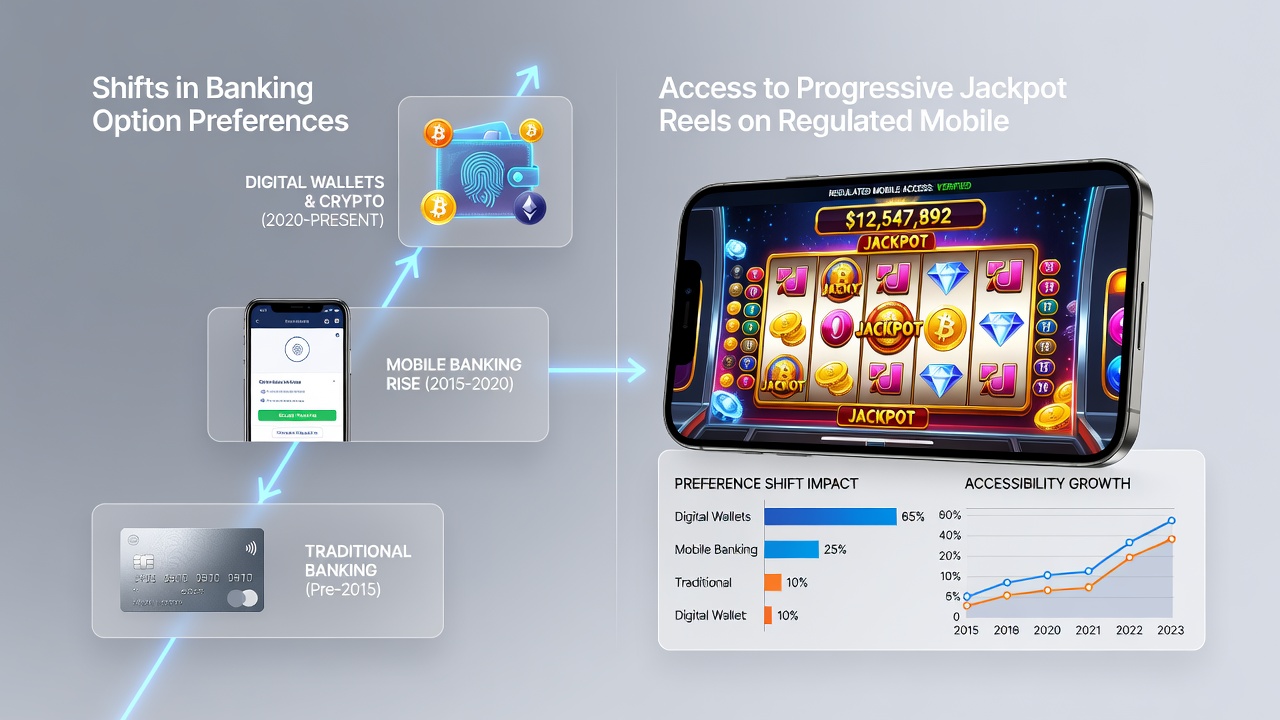
Observers tracking transaction logs across multiple jurisdictions note that e-wallet usage rose from roughly 35 percent of total deposits in 2022 to over 58 percent by October 2026, and this increase correlates with expanded access to high-value progressive reel titles on smartphones and tablets. Operators respond by integrating real-time balance checks that clear within seconds rather than hours, allowing the jackpot contribution meter to update immediately after each spin, whereas slower bank transfers often place temporary holds that block participation until funds settle. Research from the European Gaming and Betting Association indicates that platforms using instant methods maintain higher average session lengths on progressive games because players encounter fewer interruptions during the funding step.
Verification Requirements Across Jurisdictions
Provincial regulators in Ontario and British Columbia, along with gaming control boards in New Jersey and Pennsylvania, enforce standardized identity checks that now prioritize digital wallet providers already integrated with national banking rails, and this standardization reduces the number of manual reviews required before a player can unlock jackpot-enabled reels. Those who rely on older card-based options frequently face additional layers of confirmation that extend beyond the initial deposit, which can delay entry into linked progressive networks by 24 to 48 hours in some documented cases. Figures released by the Australian Communications and Media Authority reveal similar patterns in licensed mobile environments, where wallet-preferred users complete onboarding sequences 40 percent faster than those using legacy methods.
Mobile Interface Design and Jackpot Pool Connectivity
Application developers have redesigned funding screens to surface the most common digital options first, while relegating less frequently chosen methods to secondary menus, and this ordering influences which players reach the progressive jackpot reels within the same login session. When a platform connects to a shared jackpot network, the system must confirm both the deposit and the regulatory compliance status before allowing spins to contribute to the pool, so any delay in banking verification directly reduces the number of eligible participants at any moment. One study covering North American and Australian markets found that platforms optimizing for instant transfers recorded a 22 percent increase in jackpot contributions per active user compared with those maintaining mixed-method support without interface prioritization.
Settlement Speed and Regulatory Compliance Overlaps
Regulated platforms must reconcile each transaction against anti-money-laundering thresholds before releasing funds or permitting continued play on linked progressive titles, and faster banking rails compress this reconciliation window from days to minutes. In practice, operators using instant settlement report fewer compliance flags per thousand transactions, which keeps more accounts in good standing and preserves uninterrupted access to jackpot reels across mobile sessions. Data compiled through October 2026 shows that jurisdictions permitting cryptocurrency-linked wallets under strict licensing conditions have seen additional uptake, though these options remain limited to specific provinces and states where legislation explicitly authorizes them.
Cross-Border and Provincial Variations
Players crossing between provincial boundaries encounter differing banking acceptance lists, and these variations determine whether a single mobile application can deliver the same progressive jackpot catalog in every location. Some platforms maintain separate funding gateways for each regulatory region to stay within local rules, which creates situations where a preferred digital wallet works in one province yet routes to a slower fallback method in another. Industry reports note that operators who standardize on widely accepted instant methods across borders achieve more consistent jackpot pool participation rates than those relying on region-specific card processors.
Conclusion
Banking preference shifts continue to reshape the technical and regulatory pathways that connect mobile users to progressive jackpot reels on licensed platforms, with digital wallet dominance producing measurable changes in verification speed, interface design, and pool contribution frequency. As transaction data from October 2026 onward becomes available, further adjustments in compliance protocols and application architecture are expected to follow the same trajectory already observed in multiple jurisdictions.